Systems integrator DWFritz was renowned for being able to automate tasks that many other integrators consider impossible. Whether it’s consistently dispensing fluids at a precise 10 micrograms per unit, or assembling sensitive electronic components at fantastically high speeds with zero tolerance for defects, they had capabilities that put many other integrators to shame. They also had the unique habit of identifying when a custom machine had potential as a product, and producing those machines at scale.
Their most recent invention was a machine capable of stacking electrodes for large format batteries - like those in an electric car - faster and more precisely, with a machine that used less power and took up less floorspace than any other available assembly device. I developed their go to market campaign, starting with a product launch at the Detroit Battery Show, and developed all of the campaign materials, including the infographic and the two videos below.
Infographic design was handled by Plazm. Live action video was shot by Visual+Aid. Animation and video editing were handled by Exclaim.
This video was featured on a large, vertical video pillar in DWFritz's booth at the Battery Show 2025 in Detroit. I was the creative director for this project, wrote the script and briefed the animated portions, and acted as producer for the interview segments, which were shot on location at DWFritz’s Wilsonville, OR facility.
I wrote and directed this animated infographic, which appeared on a pedestal in the DWFritz booth at the Battery Show in Detroit in 2025. The physical display also featured 3D printed models of a traditional electrode stacking machine next to the new DWFritz technology, to show the footprint comparison. The placement and relative size of those models is indicated by the orange and blue rectangles in the video.
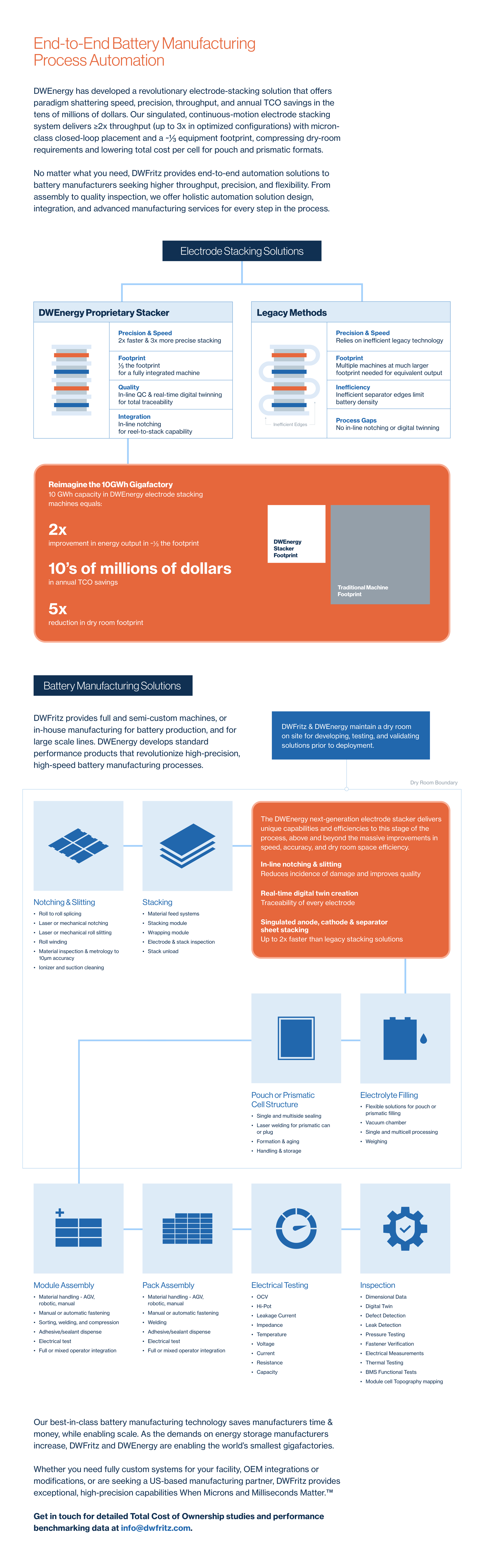
I developed the visual concept and wrote all copy for this infographic, which was originally used on the DWFritz website to explain both their full capabilities in automated battery manufacturing, and also to explain the extraordinary advantages of their new electrode stacking technology versus legacy methods.