As a young startup, and one of the very first Robotics as a Service (RaaS) companies, Rapid Robotics had two challenges: build trust among manufacturers and logistics operators, and explain an entirely new financing model to a skeptical audience. Most content in the automation space does one thing: establishes the technical competence of the business. As Rapid’s Director of Brand Narrative, I wanted to go beyond showing our technical bona fides. I quickly built a content program from scratch to produce white papers and other content to position Rapid Robotics as a company with a strong, sympathetic perspective on the headwinds faced by manufacturing and logistics and why RaaS made sense.
9 Reasons You Shouldn’t Automate Palletizing (and Why They’re Wrong)
This whitepaper began with a Sales need. I interviewed every rep to surface the real objections they were hearing from prospects, then built the asset's inverted "reasons not to" framing as a way to make objection-handling material genuinely entertaining rather than defensive. I turned those interview transcripts and the listicle structure over to Denise Boyd, who wrote this white paper. Superside handled design under my direction.


Capex vs. raas: the true cost of owning robots
In 2022, Robotics as a Service was a new and poorly understood business model. Creating the brief for an asset that clearly explained the value of the model in a way that was meaningful to manufacturers required me to do deep research on the economic realities affecting American industry, the complexity of automation integrations, and manufacturing labor market economics. The result: this white paper written by Chris Antonowich, which directly addresses the risks and costs of various approaches to automation. Design by Superside with art direction by Jaime Chong.


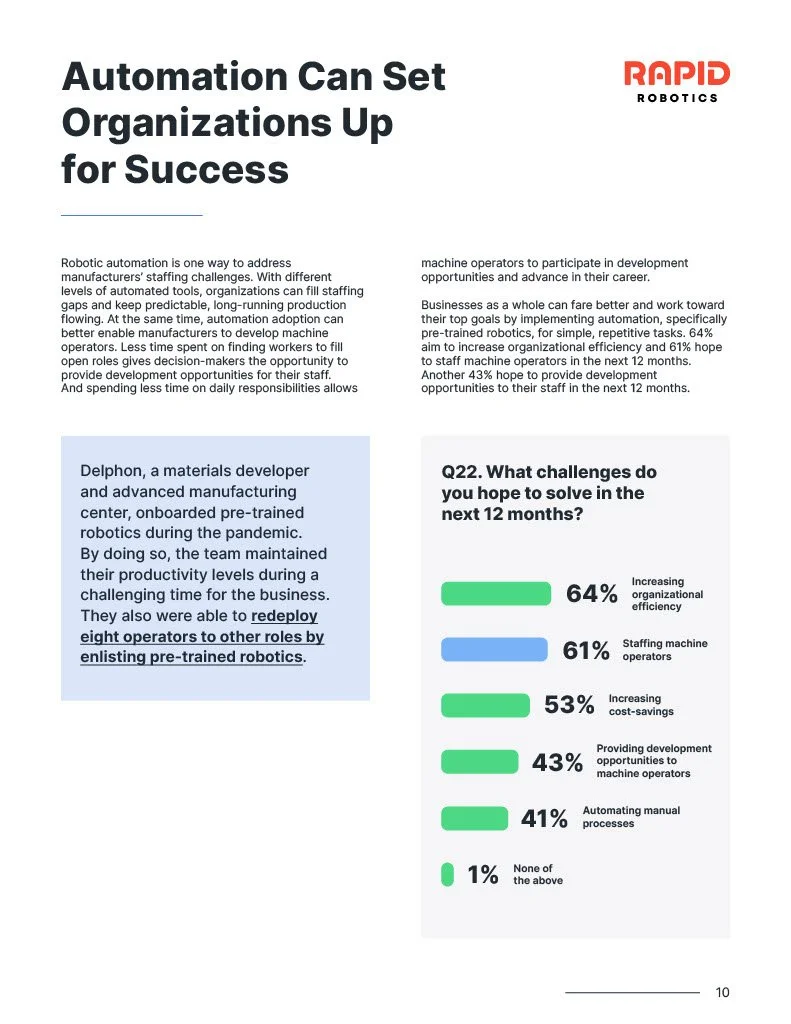
the state of manufacturing automation 2022
In 2022, Rapid Robotics commissioned a survey of American manufacturers’ attitudes towards and readiness for automation. I heavily edited the report, and directed Superside in the design of this white paper, and the creation of data visualizations that we were able to use over and over again in other pieces of content, social posts, sales decks, and more.